Released quarterly, the ACLI Financial Resilience Index measures the direction and magnitude of middle-class financial resilience by tracking 26 different variables that represent important middle-class cost pressures and financial resources.
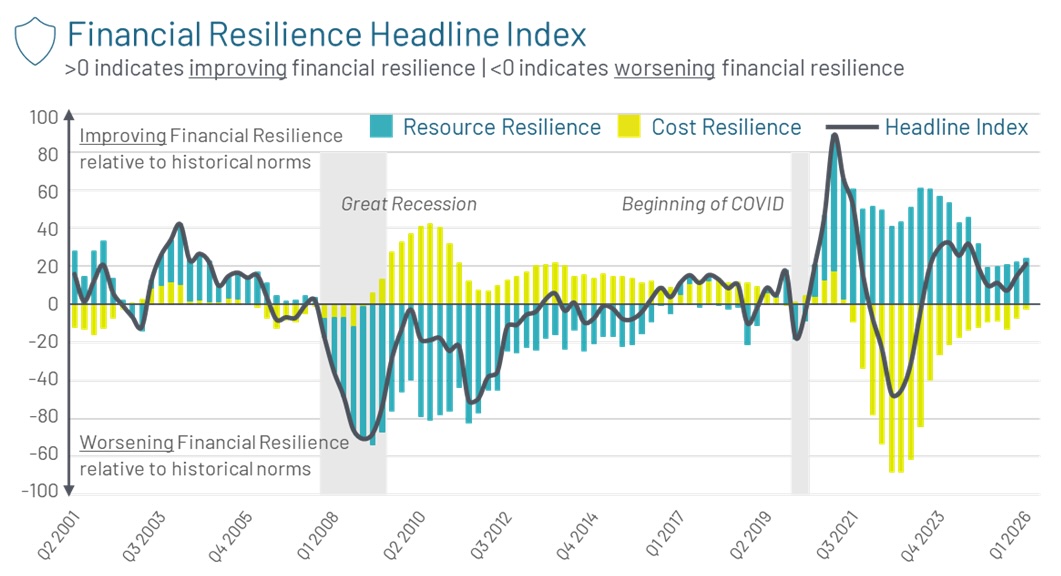
The Headline Index is composed of a Cost Resilience Index and a Resource Resilience Index. A score above 0 means that financial resilience is above historical norms.
The Cost Resilience Index measures the ability to afford modest luxuries without trading off the essentials and to afford life-stage appropriate care and education.
The Resource Resilience Index measures the ability to handle unexpected expenses and sustain a quality of life, and the ability to save and live well in retirement.
The index frames financial resilience as the interaction of cost pressures and financial resources and provides insight into the specific underlying factors that drive changes in middle-class financial resilience. Consumer survey findings (featured in the full index and analysis) offer a snapshot as to how middle-class households are feeling.
Middle-class financial resilience is improving, but it remains vulnerable to inflation and shifting economic conditions. The 2026 Q1 Headline Index increased to 21, up 6 points from the previous quarter and 11 points from Q1 2025. This score indicates that middle-class financial resilience is showing solid improvement by historical standards.

Strong wage growth and rising asset values have fueled middle-class financial resilience. However, resurgent inflation and slower wage growth may start to erode middle-class purchasing power.
Cost pressures improved modestly and are nearing historical norms. However, energy and essential costs may increase pressure moving forward.
The companion survey found that 25% of middle-class households listed retirement readiness as the financial goal that would most make them feel that they had achieved financial success.